Controlled AI. Real results.
From open-source hits to an assessment you can defend
Operators collect open sources under policy – usernames, email registrations, domains, social and messaging channels including Telegram, and commercial OSINT such as Fivecast ONYX. Every hit is checked, every finding keeps its source, and the analyst decides what goes into the assessment.
Product view
Open sources in, assessed findings out
Operators run the collection, check every hit and connect what holds up in the case graph. The analyst gets an assessment – not a list of raw hits.
Sources
Usernames, email registrations, domains, social and messaging channels, commercial OSINT
Check
Cross-source comparison and false-positive marking
Graph
Accounts, addresses, domains, wallets and locations with sources
Output
Assessment with confidence and open questions
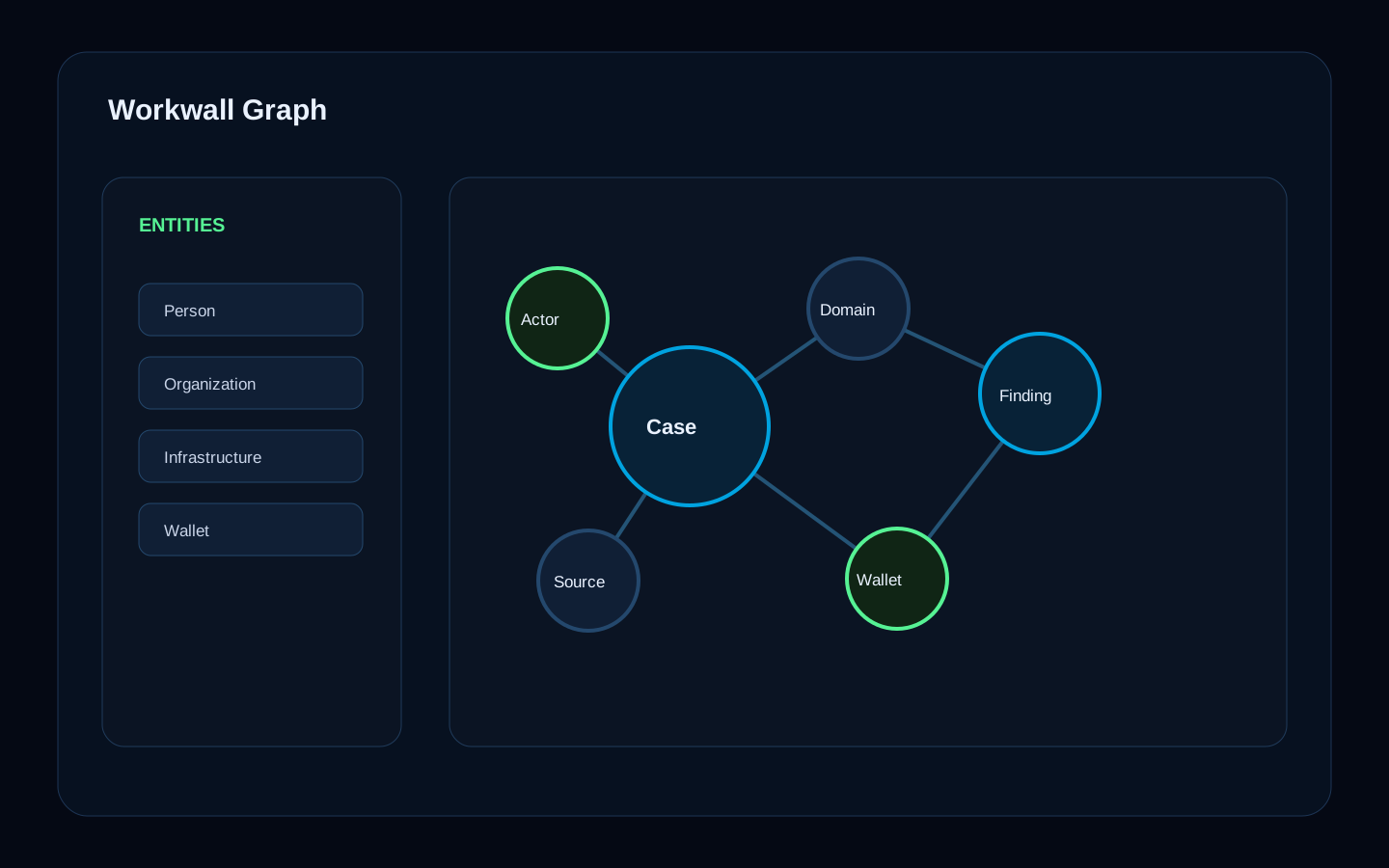
CASE GRAPH
Findings become connected context
What OSINT teams get back
Less manual collection
Operators query the approved sources and bring the results into the case.
Fewer false positives
Hits are compared across sources and marked before they reach the assessment.
Findings with sources
Every link in the case graph shows where it came from and how it was checked.
Faster assessments
The analyst reviews a prepared assessment instead of assembling it from tabs and screenshots.
Where OSINT work usually breaks
Open-source tools return many hits fast, but a hit is not a finding. Without source notes and checks, a list of matches turns into false confidence.
Arqent operators collect under policy, check every hit, connect only what holds up and hand the analyst an assessment with its evidence trail.
UNDER POLICY
Collect
Operators query the sources approved for the case – nothing runs outside the case boundary.
FALSE POSITIVES
Check
Hits are compared across sources, likely false positives are marked and confidence is made visible.
CASE GRAPH
Correlate
Accounts, addresses, domains, wallets and locations are linked in the case graph – each link with its source.
OUTPUT
Assess
The analyst receives an assessment with reviewed hits, source notes and open questions.
Use cases
OSINT analysis workflow
Use this pattern when open-source signals need to become an assessment that holds up in review.
OSINT
OSINT analysis
Operators collect and assess open sources – usernames, email registrations, domains, social and messaging channels including Telegram, and commercial OSINT such as Fivecast ONYX. Every hit gets a source note and a false-positive check before it becomes a finding.
Explore workflowSystems and sources
What the operator does
Results
Product view
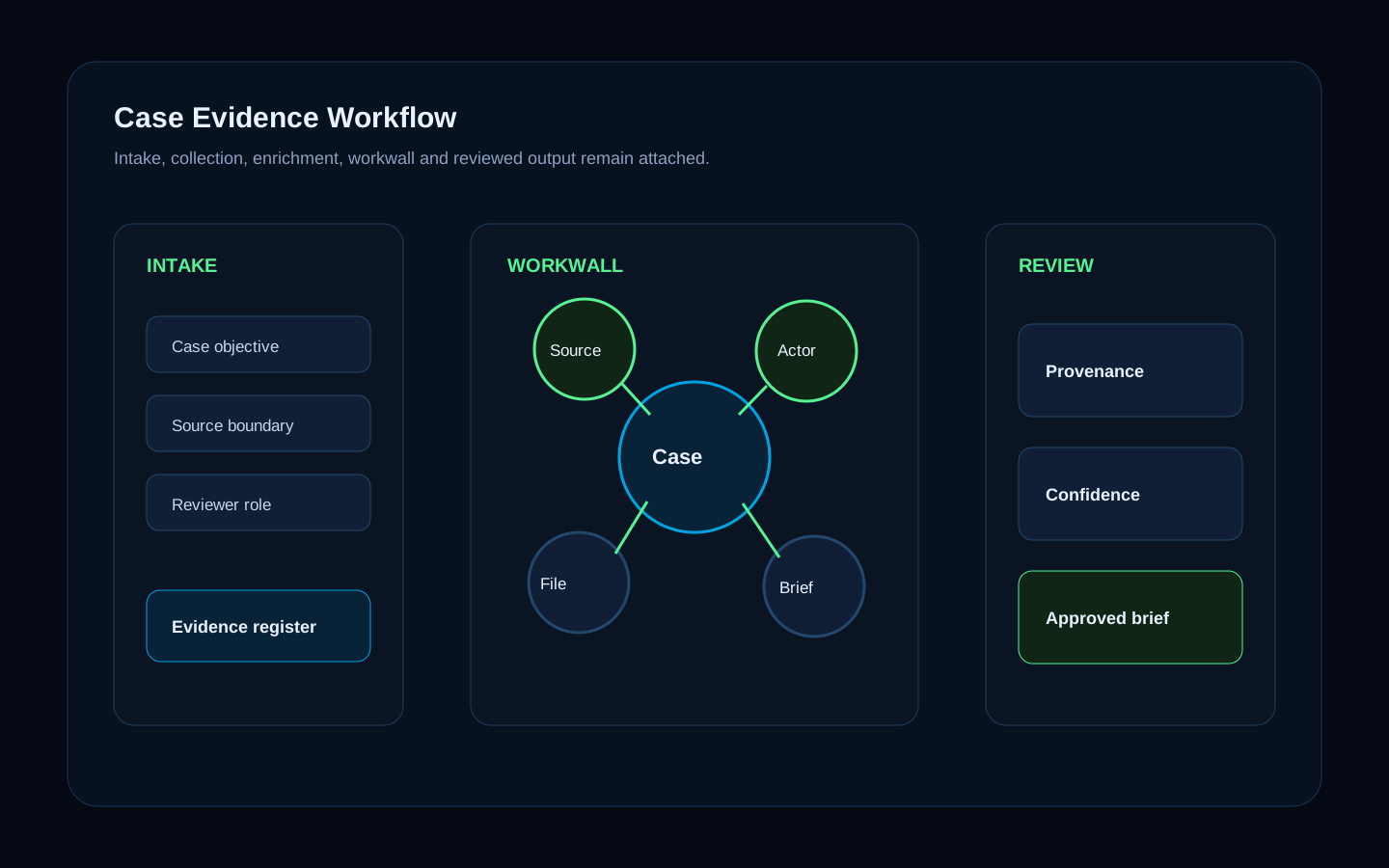
Every finding keeps its source
Collection, checks, graph links and the final assessment stay attached to the case so reviewers can follow every step.
Collect
Approved sources for this case
Check
False positives marked, confidence shown
Connect
Supported links in the case graph
Assess
Reviewed findings and open questions
EVIDENCE TRAIL
Every result stays linked to its sources
Trust model
Built for defensible OSINT
OSINT analysis needs control over sources, uncertainty and what leaves the case.
Source control
Only approved sources run, and only inside the case.
- Approved sources
- Case boundary
- Source notes
Hit quality
Presence is not attribution.
- False-positive review
- Confidence
- Open questions
Independent check
A separate review confirms the assessment before it counts.
- Blind review
- Analyst sign-off
- Decision trail
Deployment
Run where your sources and cases have to stay.
- On-premises
- Airgapped
- Local models
Map your OSINT workflow
Tell us which sources you use, how you review hits and what the assessment needs to contain.