AIF layers connect the whole intelligence operating model
The layer model explains why Arqent is a fabric rather than an OSINT product: every capability connects to cases, evidence, governance and deployable Solutions.
Product view
What the layers make possible
Each layer has a specific job in the operating model: boundary, case, evidence, governance, capability, correlation and Solution delivery.
Resource
AIF Layers
Use
Architecture context and buyer evaluation
Trust boundary
Verified claims, careful examples and clear assumptions
AIF LAYER STACK
Governed fabric from deployment to Solutions
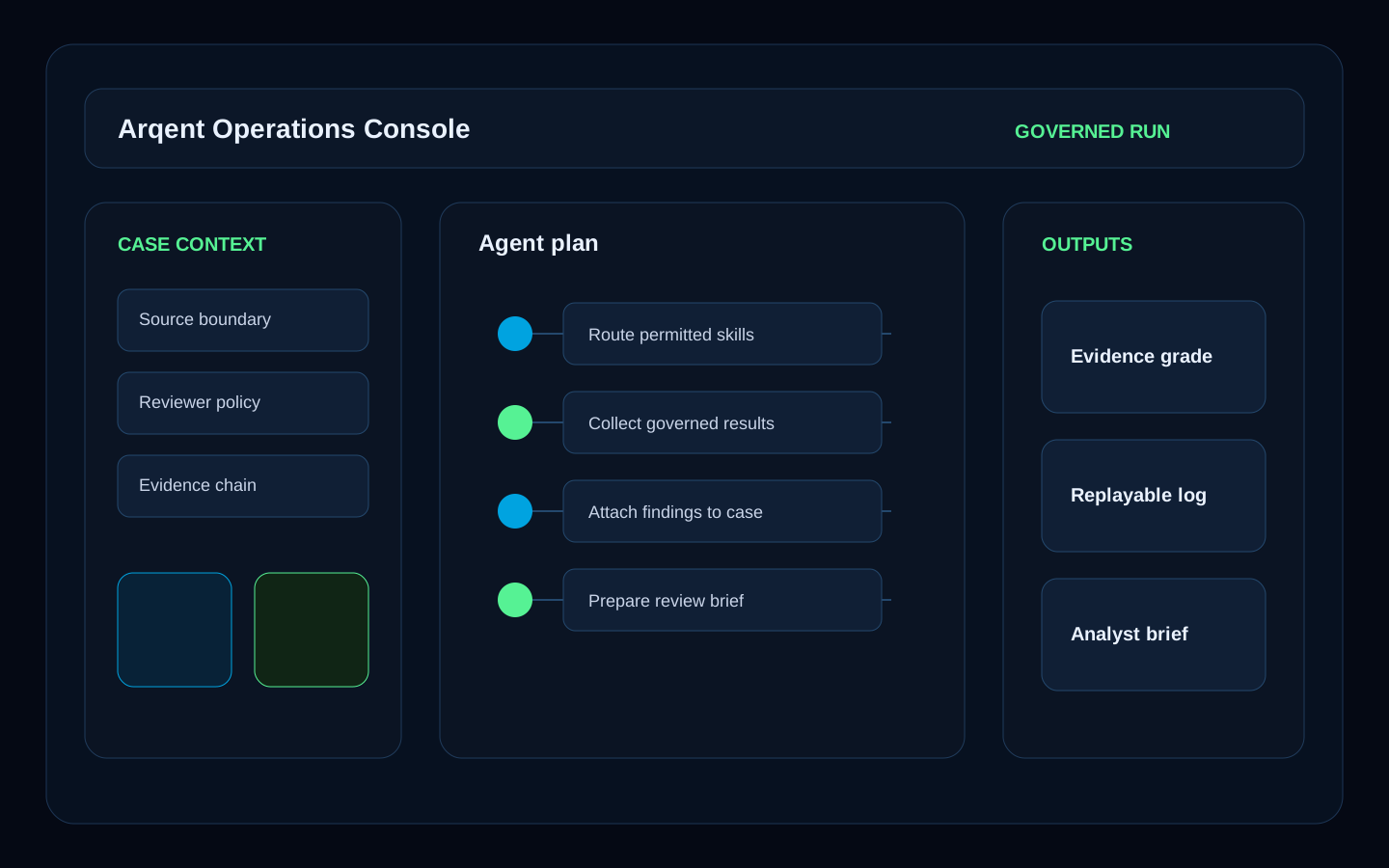
WHERE IT RUNS
Deployment boundary
SaaS, government cloud, on-prem, airgapped and edge deployment patterns are treated as platform architecture, not sales afterthoughts.
HOW TEAMS WORK
Operational context
Cases, assignments, files, dashboards, chat and permissions become the working unit for analysts and reviewers.
WHAT GETS PRESERVED
Evidence persistence
Tool calls, generated reports, artifacts and reviewer decisions stay attached to the case for later review.
HOW WORKFLOWS SHIP
Solution layer
Domain workflows, dashboards, Skills, policies and data access can be packaged as repeatable mission Solutions.
Use the layer model in a platform walkthrough
Walk through how your mission workflow maps to deployment, case, evidence, capability and Solution layers.