Turn suspicious email into reviewable evidence
Email forensics workflows need technical enrichment, correlation and a report that a reviewer can stand behind.
Product view
Turn a suspicious email into a defensible case record
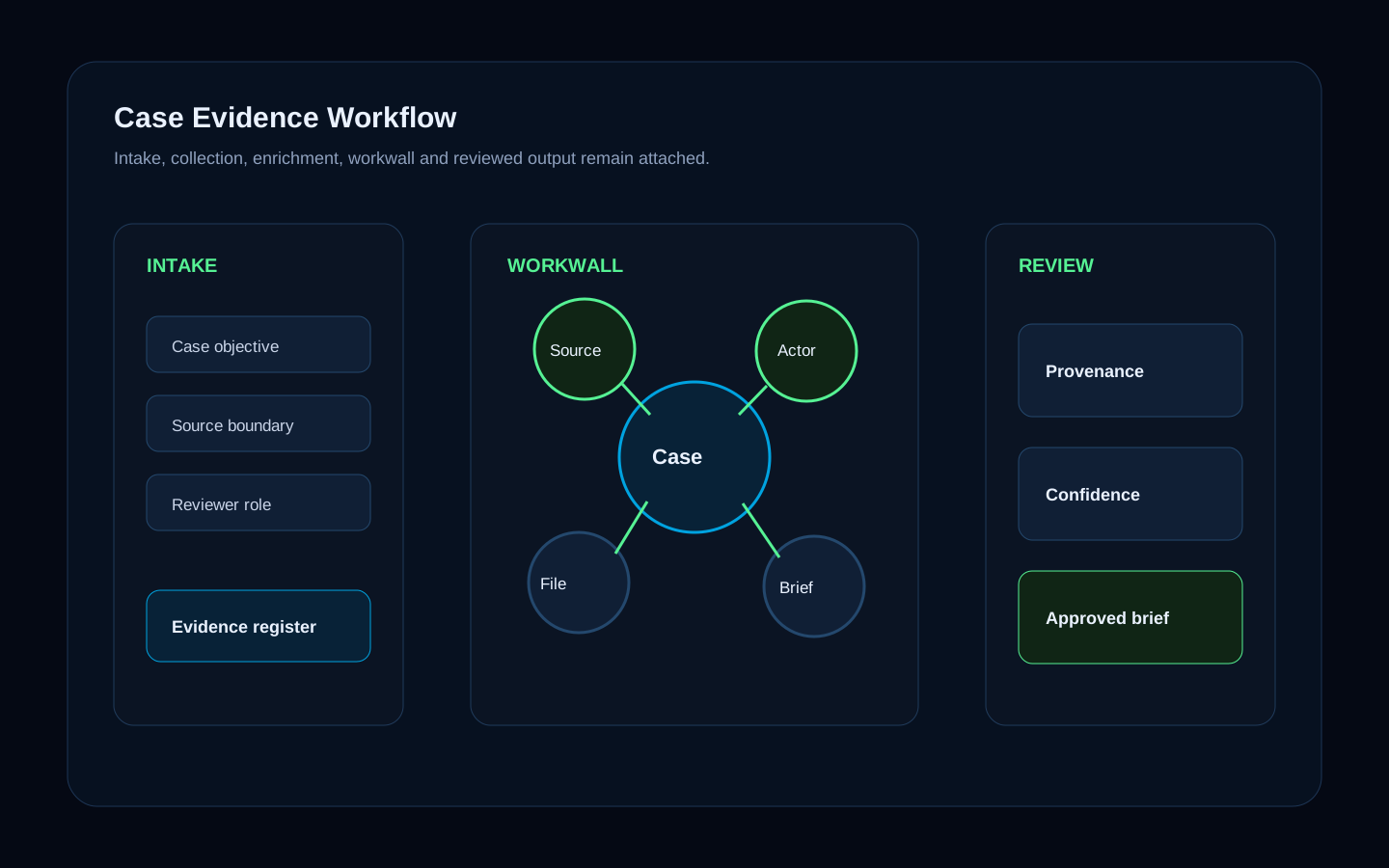
AIF keeps the EML, headers, links, attachments, enrichment results, analyst notes and reviewer report attached to the same fraud or DFIR workflow.
Source
EML, headers, links and attachments
Enrichment
Domain, URL, identity and attachment checks
Correlation
Related accounts, wallets, domains and source notes
Report
Reviewer-ready findings and decision trail
CASE TO EVIDENCE FLOW
Every output remains attached to the case
What fraud and DFIR teams get back
Faster first pass
Preserved artifact context
Connected indicators
Reviewer confidence
Where email triage usually breaks
BEC and suspicious-email work starts with one artifact, then fans out into headers, domains, links, attachments, account context and analyst notes.
AIF keeps those checks inside one case workflow. The result is not just an answer; it is a reviewable record of the artifact, enrichment, reasoning and output.
EML CONTEXT
Source file
Preserve the source artifact and relevant metadata inside the case.
INDICATORS
Technical enrichment
Headers, domains, links and attachments can be routed through governed Skills.
RELATIONS
Correlation
Connect email findings with domains, accounts, wallets or dark web references where relevant.
OUTPUT
Reviewer report
Produce a reviewable report with evidence artifacts and decision trail.
Use cases
Email forensics workflow
Use this pattern when a suspicious email needs technical enrichment and reviewer-ready evidence, not a disconnected lookup chain.
Fraud / DFIR
Email Forensics & BEC
Email forensics workflows need technical enrichment, correlation and a report that a reviewer can stand behind.
Explore workflowIndustries
Capabilities
Outputs
Product view
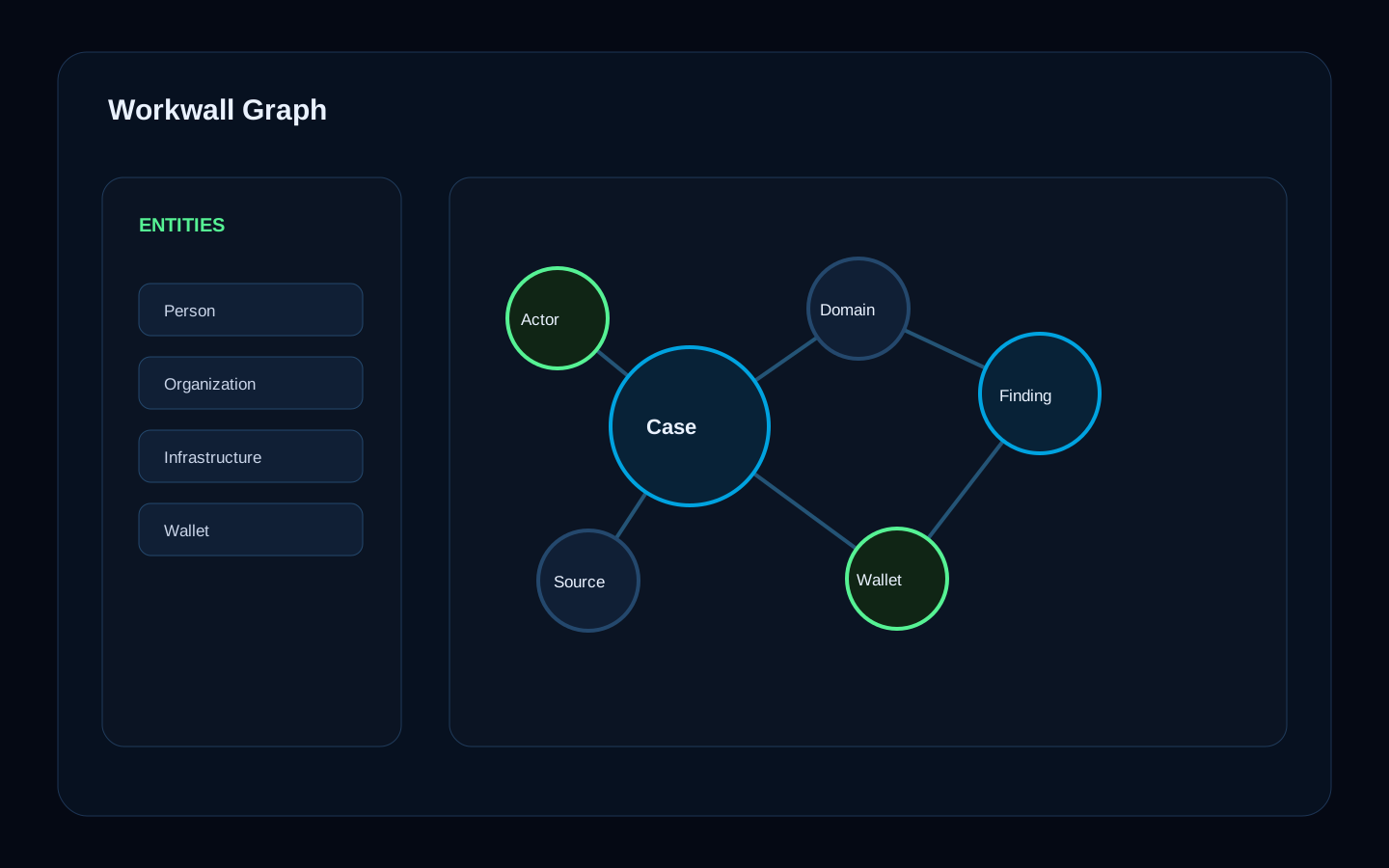
Connect email indicators to wider case context
Domains, sender accounts, URLs, attachments, wallet references and actor notes can become connected findings before the report is written.
Indicators
Headers, domains, URLs, accounts and attachments
Context
Related cases, source notes and enrichment outputs
Relations
Why an indicator changes the assessment
Decision
Escalate, monitor, close or brief
WORKWALL AND ONTOLOGY
Findings become graph context
Trust model
Built for reviewable forensic work
Email forensics needs speed, but the artifact trail and reviewer context cannot disappear.
Artifact integrity
Preserve the source email and relevant metadata.
- EML context
- Metadata
- Attachment notes
Tool transparency
Keep enrichment outputs tied to the case.
- Domain checks
- URL checks
- Execution log
False-positive control
Keep uncertainty visible before escalation.
- Confidence notes
- Reviewer checks
- Limits
Report readiness
Produce outputs a reviewer can understand and defend.
- Findings
- Decision trail
- Export context
Map an email forensics workflow
Start with source artifacts, enrichment expectations and reviewer output requirements.